
Canada’s Guide to Selling Glasses Online: Marketing to Get Your First 100 Customers
Who this article is for
This article is written for both new online optical businesses and existing optical stores adding e-commerce to complement their current business. If you are starting from scratch, your biggest challenge is visibility. You need people to discover your brand, trust it quickly, and feel confident enough to place an order. If you already run a physical optical store, your challenge is slightly different. You may already have trust, local recognition, and existing patients, but you now need to convert that goodwill into online traffic and online sales.
In both cases, the first 100 customers matter because they do more than generate revenue. They create feedback, validate your positioning, reveal weak points in your site, and begin shaping your reputation.
Start with clarity before promotion
Many businesses rush into marketing before they are clear on what exactly they are trying to sell and to whom. That usually leads to weak campaigns, vague messaging, and wasted spend.
Before actively pushing traffic, make sure your store answers a few basic questions clearly. What kind of eyewear are you known for? Who is your ideal customer? Why should someone buy from you instead of a larger competitor or marketplace? What level of service, expertise, or product focus makes your store different?
A store that tries to appeal to everyone usually struggles to gain traction early. A store that presents a clear niche, clear promise, and clear reason to trust has a much stronger chance of converting first-time visitors. Your earliest marketing efforts will always work better when the offer is easy to understand.
Your first 100 customers will not come from one channel
One of the biggest mistakes in early-stage e-commerce is expecting a single platform to solve customer acquisition. In reality, your first 100 customers usually come from a mix of activity: search traffic, direct outreach, existing contacts, content, referrals, social media, and paid campaigns.
That is why the goal at the beginning is not to master every channel. It is to create a small marketing system where each part supports the others. Your content builds trust. Your product pages convert interest. Your email captures visitors who are not ready yet. Your ads bring in targeted traffic. Your social presence helps people feel that the business is active and real.
The businesses that acquire early customers most efficiently are not always the loudest. They are usually the clearest and the most consistent.
Begin with the audience you can reach most easily
Your first customers are often closer than you think. If you already have a physical optical store, start with your existing patient and customer base. Let them know you now offer online ordering, reorders, accessories, or selected frame collections through your website. This can be done through email, in-store signage, receipt messaging, and staff conversations. Existing trust is one of the strongest advantages you have, so use it.
If you are launching a new online-only brand, begin with the audiences most naturally connected to your niche. A sports eyewear brand may find early traction in cycling groups, running communities, pickleball clubs, or local performance-oriented social circles. A kids’ eyewear concept may connect best with parent communities. A therapeutic or screen-use eyewear line may resonate with office workers, professionals, or wellness-focused audiences.
The first 100 customers rarely come from broad, expensive targeting. They often come from focused relevance.
Search intent is one of your strongest assets
People searching for eyewear online often have clear buying intent. They may already know the style, function, or lens category they want. This is why search should usually be one of your earliest priorities.
That does not only mean paid search. It also means building your website so it can earn organic visibility over time. Collection pages, product pages, and educational content should all be written with real customer questions in mind. If someone is searching for prescription sports glasses, blue-light glasses for work, kids’ glasses online in Canada, or how to order prescription sunglasses online, your site should have useful and relevant pages that meet that intent.
Paid search can help you capture demand faster, especially for high-intent phrases tied to product categories or use cases. Organic search takes longer, but it compounds over time. Together, they create a strong foundation.
Content helps people trust what they cannot try in person
Online optical retail has one major challenge: customers cannot physically try the product before buying. That means your content has to do more work.
Good content reduces hesitation. It explains how the process works, how to choose frames, how lenses differ, what PD is, how prescription upload works, and what happens if adjustments are needed. It also gives you a way to demonstrate expertise without sounding overly sales-driven.
Your blog, knowledge base, and support pages should be part of the sales process, not separate from it. Articles should lead naturally to relevant collections or products. Product pages should connect back to educational resources. The customer should feel that your business is helping them make a confident choice, not simply pushing them toward checkout.
This is especially valuable early on, when your brand is still unfamiliar. Content can help bridge the trust gap.
Social media supports trust, but it is not the whole strategy
Many new businesses put too much pressure on social media. It can be useful, but it should not carry the full weight of customer acquisition on its own.
At the beginning, social media works best as a supporting trust channel. It helps prospective customers see your aesthetic, understand your product focus, and confirm that your business is active. It is especially useful for showcasing frame styles, packaging, customer feedback, behind-the-scenes moments, and educational snippets.
What social media often does not do well on its own is convert cold traffic into prescription eyewear orders at scale without a stronger supporting system. That is why it works best when paired with a clear website, email capture, search visibility, and retargeting. Think of it as part of your brand environment, not the entire marketing plan.
Email is one of the most valuable early assets
Not everyone who visits your site is ready to order on the first visit. That is normal, especially in optical. People may need time to compare styles, confirm their prescription, or think through lens options. If you lose them entirely after one visit, your acquisition effort becomes more expensive.
That is why email capture matters early. A simple welcome incentive, style guide, or useful educational lead-in can help turn anonymous traffic into an owned audience. Once someone joins your list, you can continue the conversation with helpful and relevant communication.
Early email sequences should focus on reassurance, education, and clarity. Explain your process, highlight your strengths, answer common concerns, and introduce customers to your most relevant products. Avoid sending constant promotions too early. At the beginning, trust-building often matters more than aggressive sales messaging.
For existing optical stores, email can also reconnect with past customers and encourage reorders or first-time online purchases.
Reviews and customer proof matter quickly
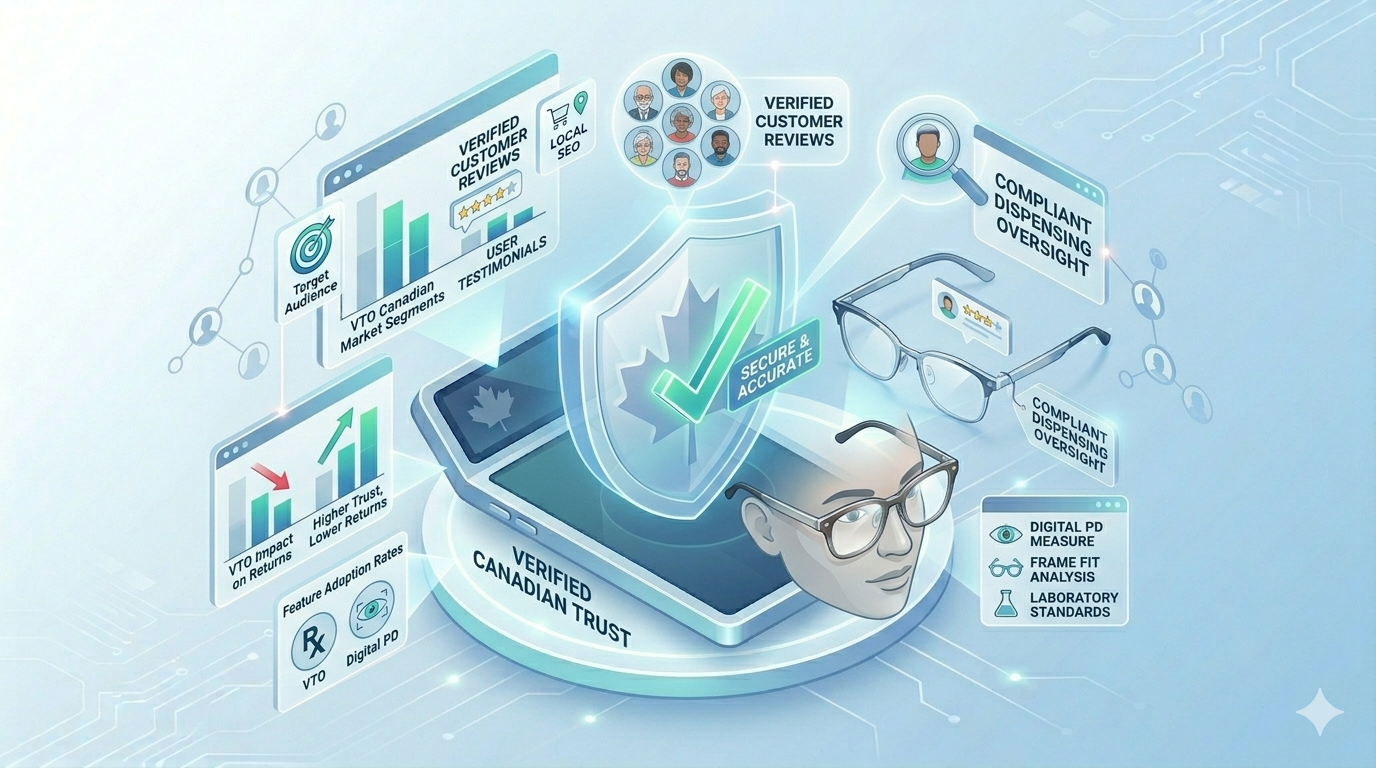
Your first 100 customers are not just buyers. They are the beginning of your social proof. In online optical retail, reviews matter because they reduce uncertainty for the next customer. A product with no reviews always feels riskier than one with honest feedback and real usage stories.
Ask for reviews in a structured and professional way after the order has been delivered. Keep it easy. Encourage customers to mention fit, clarity, ordering experience, and service. If possible, gather photo reviews or testimonials that can be reused on product pages and marketing materials.
At this stage, even a small number of good reviews can make a noticeable difference in conversion. Early reputation matters more than volume.
Paid advertising should start narrow
It can be tempting to run broad campaigns immediately, but that usually creates waste. In the beginning, it is better to run smaller, more focused campaigns tied to your strongest products or clearest use cases.
Start with the products or categories that are easiest to explain, most likely to convert, and most aligned with your niche. A store with a strong sports focus should lead with its sports category rather than trying to sell everything at once. A store specialising in premium coated everyday lenses should focus on those benefits rather than generic traffic.
Use paid ads to test messaging, identify winning products, and understand which audiences respond best. Then refine. Early advertising should be about learning as much as selling.
Existing stores should use their offline advantage
If you already have a physical optical business, your first 100 online customers may come faster because you already have trust. The key is to make your current customers aware that the online option exists and explain why it is useful.
That may include reorders, convenience purchases, selected frame collections, replacement lenses, accessories, or pickup options. You can promote the website in-store, through your email list, in your packaging, and in follow-up communication after appointments or purchases. Staff should also understand how to introduce the online store naturally.
Your existing reputation is a valuable marketing asset. Bringing that into the online channel makes customer acquisition more efficient and lowers the level of hesitation.
Watch what customers actually do
Your first 100 customers will teach you a great deal if you pay attention. Which pages are attracting traffic? Which products are getting clicks but not sales? Which questions come up repeatedly before purchase? Which lens options create confusion? Which campaigns are bringing the best visitors?
This information is more valuable than assumptions. Early marketing should be treated as a learning phase. Every email open, ad click, support question, and completed order helps shape the next decision. Over time, your best-performing channels and messages will become clearer.
The goal is not only to get 100 customers. It is to understand how to get the next 1,000 more efficiently.
A practical early-stage marketing mix
For most online optical businesses, a sensible early mix includes:
- a clear homepage and strong product pages
- useful educational content tied to real customer questions
- basic search engine optimisation on product and collection pages
- a small paid search or shopping campaign
- active but manageable social media presence
- email capture and a simple welcome sequence
- post-purchase review requests
- referral encouragement where appropriate
This is enough to create momentum without spreading yourself too thin. The mistake is not doing too little. It is trying to do everything at once without doing any of it well.
Final thoughts
Getting your first 100 customers is less about chasing every marketing trend and more about building trust, clarity, and consistency. The businesses that succeed early are usually the ones that understand their audience, communicate clearly, and support each marketing effort with a store experience that converts.
Your first customers are not only revenue. They are proof of concept, feedback, and the beginning of your reputation. If you approach marketing with patience, focus, and a willingness to learn, those first 100 customers can become the foundation for something much bigger.
In this Series: Canada’s Guide to Selling Glasses Online
- Canada?s Guide to Selling Glasses Online: Why Now Is the Best Time to Start
- Canada?s Guide to Selling Glasses Online: Building Your Business Plan & Legal Setup
- Canada?s Guide to Selling Glasses Online: Creating a Strong Brand Identity
- Canada?s Guide to Selling Glasses Online: Finding Frames, Lenses & Reliable Suppliers
- Canada?s Guide to Selling Glasses Online: Designing and Launching Your E-Commerce Store
- Canada?s Guide to Selling Glasses Online: Prescription Management & Compliance
- Canada?s Guide to Selling Glasses Online: Packaging, Shipping & Returns
- Canada?s Guide to Selling Glasses Online: Pricing for Profit and Growth
- Canada?s Guide to Selling Glasses Online: Marketing to Get Your First 100 Customers
- Canada?s Guide to Selling Glasses Online: Using Virtual Try-On & Tech Tools to Build Trust
- Canada?s Guide to Selling Glasses Online: Scaling and Automating Your Business
- Canada?s Guide to Selling Glasses Online: Trends & Future Opportunities